

The gaming landscape shifts constantly, with new releases demanding attention and hype cycles moving faster than ever. Yet buried in the past are games that took bold creative risks and delivered experiences unlike anything available today. These titles have faded from collective memory despite their innovation and ambition, overshadowed by time and limited distribution. Rediscovering them reveals a era when developers could experiment freely and publishers would greenlight ideas that would never survive a modern pitch meeting.
Fighting Games and Crossover Experiments
Ehrgeiz: God Bless the Ring emerged in 1996, just one year after Final Fantasy 7 took the world by storm. Square, riding high before its merger with Enix, partnered with a lesser-known studio to create an arena fighter that would launch on both arcade cabinets and the PlayStation 1. The game's roster included Cloud, Tifa, and Sephiroth as playable characters across both versions. Console players unlocked additional fighters: Vincent, Yuffie, and Zack. This cross-promotional approach proved so effective that modern publishers still employ similar tactics, as evidenced by Final Fantasy 7 content appearing in Sonic Racing: CrossWorlds to tie into FF7 Revelation's release.
Takeshi's Challenge represents a different kind of fighting game legacy, though it never gained the same recognition. Created by Japanese comedian Takeshi Kitano, the game tells the story of a salaryman who discovers a treasure map and impulsively divorces his wife to pursue fortune. The gameplay, however, defies conventional logic. Players begin by greeting their boss using a second controller, and the obtuse requirements to avoid game over escalate from there. The difficulty and unintuitive design became legendary enough that Famitsu magazine officially designated it a bad game, yet this notoriety transformed it into a cult classic. Modern guides now help players navigate its bewildering systems, but the game remains a fascinating artifact of an era when developers could embrace pure chaos.
Experimental JRPGs on Forgotten Hardware
The Dreamcast represented Sega's last stand against PlayStation 2's dominance, and developers responded by flooding the console with experimental JRPGs designed to prove the system's worth. Elemental Gimmick Gear, abbreviated as E.G.G, exemplified this creative drive. The game casts players as a mysterious figure called the Sleeper, discovered inside an oval machine bearing the same name. When an ancient evil threatens civilization, the Sleeper awakens and must drive the machine across a world of hand-drawn sprites and backgrounds that evoke late-1990s animated television. Exploration, world-building, and constant spinning mechanics define the experience, creating an atmosphere thick with nostalgic charm that few modern games attempt to replicate.
Resonance of Fate pushed experimental design even further, blending Matrix-inspired combat with early-2000s anime aesthetics into a package that defies easy categorization. The game features hexagonal map navigation, complex battle systems centered on guns and backflips, and a deliberately convoluted story that embraces its own absurdity. The combat demands planning and positioning while delivering cutscene-quality power moments. Characters begin as archetypal anime tropes but develop genuine depth over dozens of hours. Resonance of Fate rewards patience with a JRPG experience that remains singular even by today's standards, offering challenge and personality in equal measure.
Napple Tale: Arsia in Daydream arrived on Dreamcast with deceptively bright, colorful aesthetics that masked its true nature. Beneath the cheerful exterior lies a JRPG-platformer hybrid that explores themes of time's passage and life's inevitable changes. The game carries spiritual kinship with titles like NiGHTS and Klonoa, delivering meaningful narratives wrapped in whimsical presentation. Composer Yoko Kanno created the entire soundtrack, lending the work a level of musical sophistication that elevates every moment. The care evident in its design suggests a project born from genuine creative passion rather than commercial calculation.
Nintendo's Experimental Era
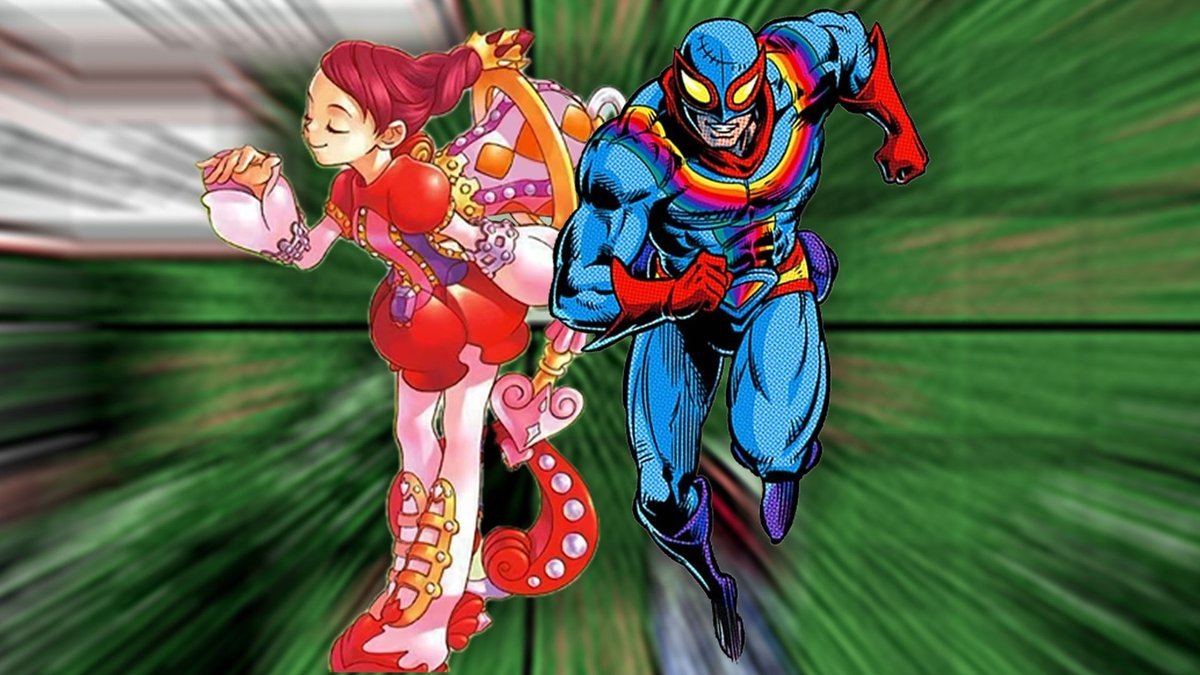
Captain Rainbow emerged from Skip Ltd., the studio behind Chibi-Robo, and represents a type of game Nintendo would never greenlight today. Released for Wii on August 28, 2008, the game follows Nick, a character capable of transforming into the titular Captain Rainbow. He finds himself on Mimin Island, tasked with granting wishes to obscure Nintendo characters pulled from decades of the company's deep catalog. The art direction evokes Okami's visual style while maintaining its own identity. Despite strong design and creative ambition, Nintendo deemed the game too niche for Western audiences and never localized it, leaving English-speaking players unable to experience this peculiar adventure.
Bizarre Mechanics and Unconventional Design
Puyo Puyo Gaiden: Puyo Wars represents the era when companies could greenlight strange spin-offs and experimental sequels without extensive market research or focus testing. The game fuses Puyo Puyo's puzzle mechanics with strategy gameplay reminiscent of Advance Wars and Fire Emblem. Players command mechs called Tectors piloted by Puyo characters themselves, with deeply customizable machines and intricate elemental systems. The concept alone defies explanation; the execution proves surprisingly robust. Released exclusively in Japan for Game Boy, this hidden gem never reached Western audiences, remaining a testament to an era of creative risk-taking that modern publishers have largely abandoned.
Seventh Cross: Evolution stands as perhaps the most obtuse and experimental title on this list. Released for Dreamcast on December 23, 1998, the game begins by asking players to assign different statistics to colors—a choice that becomes crucial later. Players then spawn into an ocean as a single-celled amoeba with only one directive: eat. A crab enemy prowls the map, capable of instant death until the player reaches level 3, a milestone requiring extensive grinding. Once the evolution mechanic activates, players must manually construct body parts using the colors they assigned earlier, placing them on a grid to determine which appendages develop. This bizarre system continues until the player grows strong enough to face the final boss. The game remains genuinely strange by any standard, let alone by modern expectations for accessibility and intuitive design.
These eight games share a common thread: they emerged from eras when creative experimentation could flourish within commercial game development. Publishers took risks on unusual mechanics, unconventional narratives, and niche appeal. Some games reached only their home regions; others faded into obscurity despite international release. All of them offer experiences that modern game design rarely attempts, whether through deliberate obtuseness, experimental mechanics, or thematic ambition wrapped in unexpected presentation. Rediscovering them reveals not just forgotten entertainment, but a different philosophy toward what games could be.