

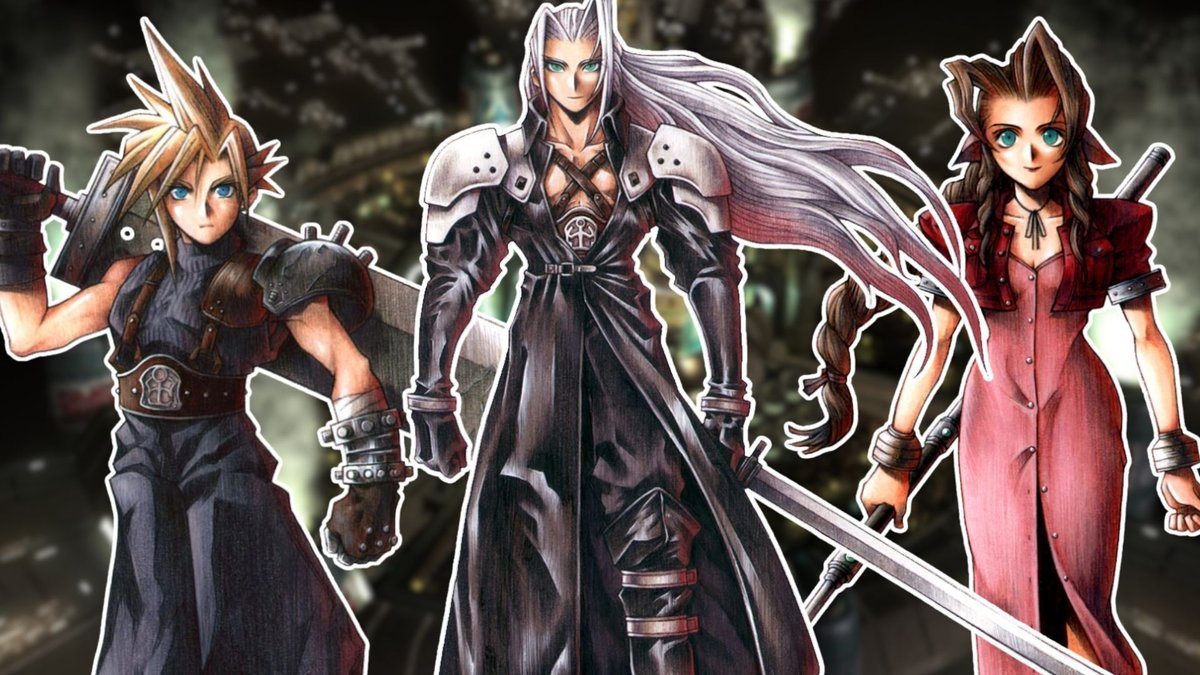
Final Fantasy 7's journey from 1994 to 1997 stands as one of gaming's most transformative development cycles. The game arrived during a landmark year for the original PlayStation, which sold over seventeen million units and dominated the console market. While the system's growing library of exclusives drove much of that success, Final Fantasy 7 became the defining title that cemented Sony's victory over Nintendo. Behind its revolutionary impact lay a series of remarkable stories that shaped how the game was made and what it ultimately became.
Real-World Tragedy Reshapes the World
The geopolitical climate of the 1990s left an indelible mark on Final Fantasy 7's development. As terrorism became an increasingly common concern worldwide, creative teams began reflecting real-world anxieties in their fantasy worlds. For Square's team, this shift took on particular urgency following a horrific event in their own country.
In 1995, a group of eco-terrorists released sarin nerve gas into the Tokyo subway system, killing fourteen people in one of Japan's worst terrorist attacks. The tragedy occurred while Final Fantasy 7 was still in active development, and it forced a critical reassessment of the game's direction. The initial story concept had centered heavily on eco-terrorists as antagonists, presented in a realistic contemporary setting.
Franchise creator Hironobu Sakaguchi made the decision to fundamentally alter the game's tone and setting in response to the Tokyo attack. Rather than glorify violence through the eco-terrorist narrative, the team pivoted toward a cyberpunk-influenced world that maintained the thematic elements without the direct real-world parallels. This shift represented more than a simple tonal adjustment; it reshaped the entire backdrop against which the player's journey would unfold.
The Death That Almost Wasn't Alone
Aerith Gainsborough's death during the final hours of the first disc remains one of gaming's most emotionally devastating moments. The impact of that scene was carefully calculated by the development team, which included multiple writers tasked with different story elements. Kazuhige Nojima penned Aerith's death sequence, but the team had considered far more radical approaches to character mortality.
During development, the creative team seriously explored the possibility of killing off the entire playable party. This concept evolved through several iterations: at one point, the team considered leaving only three characters alive, before eventually settling on the idea that only Aerith would die. Character designer Tetsuya Nomura advocated strongly against the mass-death approach, arguing that killing multiple party members would dilute the emotional weight of any individual character's demise.
Nomura recognized that Aerith's death needed to function as a narrative turning point rather than mere shock value. Her sacrifice had to feel earned and meaningful within the larger story architecture. The team heeded his counsel and committed to keeping the remaining party members alive, allowing Aerith's death to stand as the singular, irreplaceable loss that defines the game's emotional core.
From Detective Joe to Cyberpunk Rebellion
The earliest stages of Final Fantasy 7's conceptual development reveal a project with radically different origins. In those formative years, Square held modest expectations for the game—it was simply meant to be the next entry in the Final Fantasy franchise. This freedom from commercial pressure allowed Sakaguchi to experiment extensively with the narrative foundation.
Sakaguchi's initial script drafts followed a character he described as a "hot-blooded" detective named Joe navigating the streets of New York. This protagonist occupied center stage in early story outlines, while the characters who would become AVALANCHE and the anti-Shinra resistance took secondary roles. As development progressed and the vision crystallized, Joe gradually receded into the background before disappearing entirely from the project.
The creative elements Sakaguchi developed during this phase were not wasted. Other Square projects would repurpose these abandoned concepts. The sorceress character evolved into Edea Kramer, who would serve as a primary antagonist in Final Fantasy 8. The New York detective storyline provided foundational ideas that Square would develop into Parasite Eve, a survival horror game that drew directly from Sakaguchi's early detective narrative work.
Characters in Constant Flux
During the three-year development span, Final Fantasy 7's story underwent continuous revision, but character design evolved alongside it. Cloud and Aerith were the first characters Nomura drafted, and their designs would prove instrumental in shaping how the narrative itself would develop over the following years.
Cloud's original appearance featured slicked-back black hair, a distinctive visual that would later be reassigned to another character. As the design process continued, Nomura created Zack Fair as the final character addition to the roster, and Zack inherited Cloud's original black-haired aesthetic. This design choice created visual echoes that would resonate throughout the game's most complex relationships.
Aerith's character concept underwent equally significant transformation. Initially, she was conceived as Sephiroth's sister, a familial relationship that seemed obvious given their striking visual similarities—both characters possessed remarkably similar facial features and distinctive flowing hair. The decision to sever this family connection led to exploring Aerith and Cloud as romantic partners, a concept that was itself abandoned. Instead, Aerith's romantic history became tied to Zack, creating a love triangle that would drive much of the emotional complexity between the three characters and fundamentally alter how players understood Cloud's own identity and motivations.
The Console War's Unexpected Winner
The bitter conflict between Sony and Nintendo reshaped the entire video game industry during the mid-1990s. Sony's aggressive courtship of third-party developers became central to the PlayStation's strategy, and Square became a crucial target in that campaign. The company's relationship with Nintendo had deteriorated significantly over hardware and storage capacity disputes.
Early prototypes of Final Fantasy 7 were developed on Super Nintendo hardware, but a fundamental disagreement emerged over the Nintendo 64's cartridge format. Square wanted to create games on CD-ROM media, which offered vastly superior storage capacity for the cinematic vision they were pursuing. Nintendo refused to adopt the CD format, maintaining faith in cartridge technology despite its limitations.
Sony's PlayStation embraced CD-ROM technology as its foundation, making it immediately appealing to Square's ambitions. The company made the strategic decision to release Final Fantasy 7 on the PlayStation, abandoning Nintendo entirely. The exact nature of Square's departure from Nintendo remains subject to interpretation—Sakaguchi later characterized it as an amicable parting, while other Square staff members have described Nintendo telling them never to return. Regardless of which account proves most accurate, Nintendo's refusal to adapt to Square's technical requirements cost the company one of the decade's most culturally significant games.
Cinematic Ambition and Record-Breaking Budgets
As the 1990s progressed, video games began adopting cinematic storytelling techniques at an unprecedented scale. The boundary between film and interactive entertainment grew increasingly porous, with high-end computer graphics becoming a shared language between the two mediums.
CG cutscenes transitioned from novelty to industry standard, and the software tools required to create them had originated in Hollywood. Programs like PowerAnimator and Softimage 3D had been developed for feature films like Jurassic Park and Terminator 2, but game developers increasingly gained access to these professional-grade tools as the decade wore on. Square recognized that these technologies could bring their ambitious vision to life in ways previously impossible within the video game medium.
The decision to invest heavily in cinematic presentation drove Final Fantasy 7's budget to unprecedented heights. Square assembled a production team exceeding one hundred people, making Final Fantasy 7 the most expensive video game ever created at that time. The project's budget peaked at approximately eighty million dollars, a figure that would stand as an industry record for quite some time. This investment reflected Square's confidence that the game would justify its costs and fundamentally change what players expected from interactive entertainment.
Personal Loss and the Lifestream
A long-standing rumor claimed that Hironobu Sakaguchi's mother's death directly influenced Final Fantasy 7's story and Aerith's fate. The truth is more nuanced. Sakaguchi's mother died in 1988, during the production of Final Fantasy 3, nearly a decade before Final Fantasy 7's development began. While the timing doesn't support the rumor's specific claim, the profound impact of parental loss clearly shaped Sakaguchi's creative vision.
Final Fantasy 7's thematic preoccupation with death and continuity bears the unmistakable imprint of Sakaguchi's personal experience. The game's central concept—that the death of a loved one is not truly an ending, and that keeping someone's memory alive sustains their presence—resonates with the emotional weight of genuine grief. The Lifestream, the game's metaphysical system through which life returns to the planet and souls persist beyond physical death, emerged primarily from Sakaguchi's creative direction.
While Tetsuya Nomura conceived Aerith's death scene itself, Sakaguchi bore primary responsibility for the Lifestream sequences and the philosophical framework surrounding them. The core ideas of death as return to the Earth, and of memory as a form of immortality, were either directly or indirectly influenced by Sakaguchi's monumental personal loss. This thematic foundation transformed what could have been a simple shock moment into a meditation on grief, legacy, and the persistence of love beyond death.