Nintendo has brought Pikmin 4 to the Switch 2 with a new edition that includes Dandori Academy and visual enhancements, but the additions may not warrant a purchase for those who already own the original version.
Pikmin 4 originally launched on the Nintendo Switch in 2023 to widespread acclaim. The game was praised for combining the best elements of every prior entry in the franchise into what many considered the definitive Pikmin experience. A key feature that made it particularly welcoming to newcomers was the absence of day count restrictions that had limited players in earlier games, allowing for a more relaxed pace of exploration.
The premise places players in the role of a customizable rookie member of a Rescue Team tasked with finding Olimar, who has gone missing on an alien planet. Beyond locating Olimar, the protagonist must search for other stranded explorers and gather treasure to power the group's spaceship for the journey home. The player's limited physical abilities are offset by commanding a squad of Pikmin—small, plant-like creatures with distinct abilities—and Oatchi, a loyal dog-like companion.
Core Gameplay and Pikmin Variety
The Pikmin series revolves around commanding troops to complete tasks and overcome obstacles in environments that resemble real-world locations from the perspective of miniature beings. Each Pikmin type excels at different roles and possesses unique attributes. Red Pikmin, the most common variety, are immune to fire damage. Yellow Pikmin can navigate electrified obstacles and are thrown higher than other types. The Switch 2 edition introduces Ice Pikmin, which freeze enemies and transform water bodies into traversable ice bridges, alongside Glow Pikmin, ghost-like creatures that illuminate dark areas.
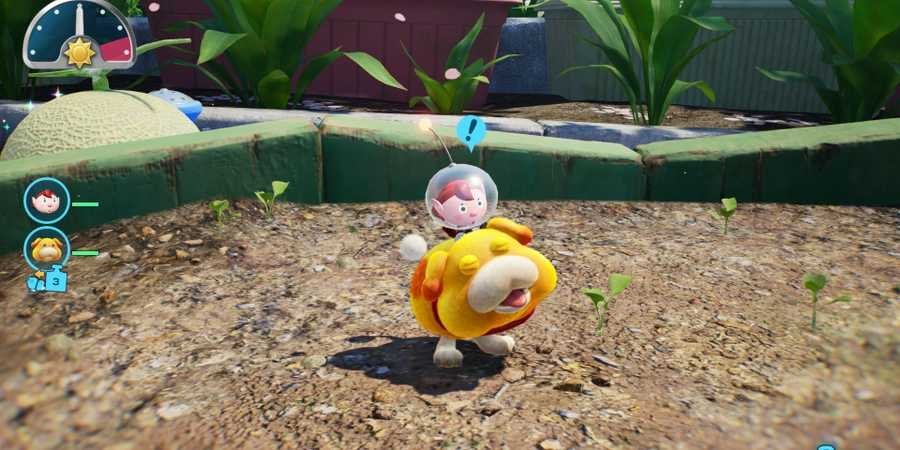
Oatchi stands as the standout addition to Pikmin 4. This companion can jump, bite enemies, dash across terrain, and be directly controlled by the player, effectively splitting command duties with the protagonist. As the game progresses, Oatchi learns additional abilities that make him invaluable in challenging situations. However, players may find themselves separated from him in certain scenarios, such as when reaching elevated areas he cannot climb.
Strategic Depth and Surface Exploration
The core appeal of Pikmin 4 centers on exploration and strategic problem-solving. The game's environments are inventively designed, frequently presenting treasure that appears unreachable at first glance. Players who learn to effectively deploy their available resources discover numerous rewards hidden throughout each area. Underground caves allow unrestricted exploration, but surface expeditions operate under time pressure—each in-game day is limited, forcing players to manage their expedition efforts carefully to maximize progress. Success requires keeping troops constantly engaged and dividing their tasks efficiently, creating some of the game's most compelling challenges.
Dandori Academy: The New Addition
The most significant new feature in the Switch 2 edition is Dandori Academy, an additional mode centered on weekly puzzle-like challenges designed to test player skill across multiple difficulty levels. The mode introduces 72 stages that will release over time, allowing players to select challenges matching their proficiency. Dandori refers to the art of commanding Pikmin effectively, and the Academy frames these challenges as competitive exams where players earn in-game medals based on performance.

However, Dandori Academy is hampered by severe restrictions. Only a limited number of challenges become available each week, and official scoring for leaderboard placement only occurs from Friday through Sunday. Attempts on other days count as training and are not recorded competitively. Challenge rotations happen only on the first Monday of each month, creating a sense of repetition that undermines long-term engagement. These limitations demand significant player commitment to participate during narrow time windows, making the mode feel more frustrating than enjoyable.
Given that the main game thrives as a casual experience playable in short sessions alone or with friends, Dandori Academy's rigid scheduling feels surprisingly at odds with the overall design philosophy. The mode could have been far more engaging if players could attempt challenges at their own pace. As implemented, it represents a missed opportunity to create an addictive competitive feature.
Visual Enhancements and Additional Features
The Switch 2 edition features enhanced high-resolution graphics in both television and handheld modes, with sharper detail throughout the environments. However, the visual upgrade proves underwhelming unless players own a 4K television. Several textures appear subpar for the Switch 2's capabilities, suggesting the upgrade was not as comprehensive as it could have been. The game does introduce voice command functionality for Oatchi, allowing players to issue commands via the Switch 2 microphone—an interesting addition that remains relatively minor in practical impact.
Multiplayer options include local and online play for up to two players. Dandori Battles allow friends to compete directly on the same system, and the game supports GameShare for local play and GameChat for online participation, even permitting players without the game to join via these features.
Strategic Gameplay Strengths
The interplay between controlling Pikmin and leveraging Oatchi's unique abilities creates genuine real-time management dilemmas that reward thoughtful planning. Players must constantly weigh which tasks to prioritize, how to allocate their squad effectively, and when to deploy Oatchi's special abilities. The game's design encourages exploration and experimentation, with many areas containing hidden rewards for players willing to think creatively about resource deployment. The cozy atmosphere makes the experience accessible for casual play while maintaining depth for those seeking strategic challenge.
The Verdict on Upgrading
For players who have already completed Pikmin 4 on the original Nintendo Switch, the Switch 2 edition presents a difficult value proposition. The visual improvements are modest, the new Dandori Academy mode is constrained by frustrating time limitations, and voice commands for Oatchi offer minimal gameplay enhancement. The package fails to justify a repurchase for those familiar with the original version.
However, for newcomers to the series, Pikmin 4 remains an excellent entry point regardless of which platform they choose. The core experience is robust, offering substantial content and engaging gameplay that rewards both casual and dedicated players. Those considering jumping into the Pikmin franchise should feel comfortable purchasing either the original Switch version or this new Switch 2 edition, as the fundamental game remains compelling. The decision between versions should depend primarily on whether players already own the original rather than on the marginal improvements the Switch 2 edition provides.