

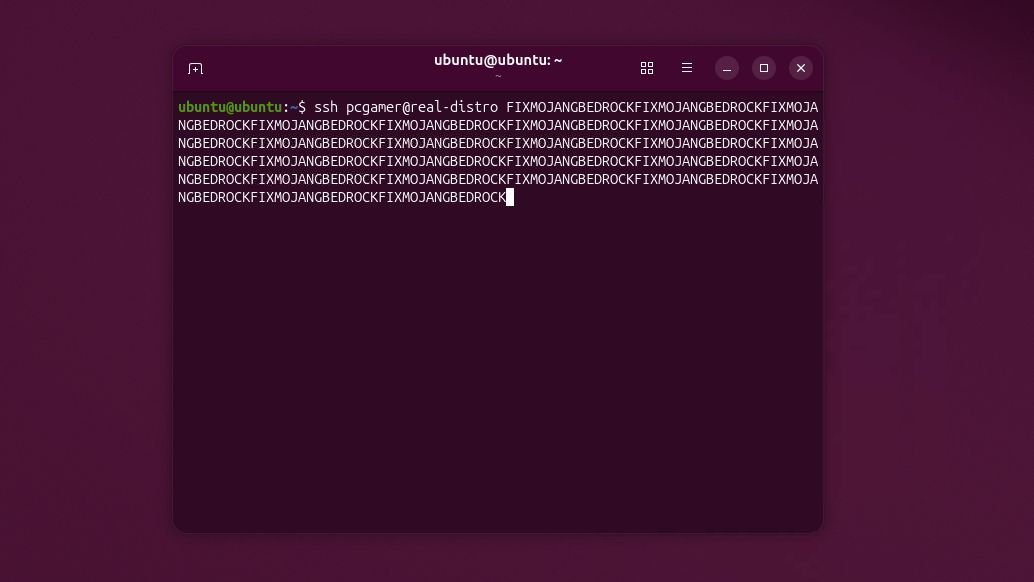
A vulnerability has been discovered in implementations of Secure Shell (SSH) on some Linux distributions that allows attackers to bypass password authentication and gain root-level access through an unexpectedly simple method: entering between 257 and 1,024 random characters as a password. OpenSSH has already released a security workaround to address the issue, though the number of affected systems remains limited to a small subset of Linux distros.
SSH is a foundational networking protocol used across Linux systems to manage secure connections between machines. It powers remote access to devices ranging from Raspberry Pi computers to network-attached storage systems, and developers rely on it daily to interact with version control platforms like GitHub. The protocol's widespread use underscores why this vulnerability, despite its narrow scope, warrants immediate attention from system administrators.
The Technical Flaw
The bug stems from an interaction between two separate authentication functions that were designed for different purposes but overlap in a specific edge case. One function uses an asterisk as a placeholder value, operating under the assumption that an asterisk would never appear as an actual password hash—a condition that normally cannot occur. However, a second authentication function can generate an asterisk as a password hash when it determines that an input is invalid due to exceeding character limits.
This collision creates the vulnerability: when an attacker submits a password string longer than the system can process, the authentication mechanism converts it to an asterisk hash, which then matches the placeholder value in the first function, granting access. The bug was discovered by Ozgun Kultekin, who documented the technical details on sshhole.com.
Which Systems Are Vulnerable
The vulnerability only affects Linux distributions that use the musl C library instead of the standard glibc library. Musl is used by a small number of distros, most notably Alpine Linux, a minimal and security-focused distribution. However, even among musl-based systems, additional conditions must be met for the vulnerability to be exploitable.

OpenSSH clarified that affected systems must be running SSH servers with Pluggable Authentication Module (PAM) support explicitly disabled. Alpine's OpenSSH implementation disables PAM by default, making it particularly vulnerable, though administrators can also manually disable PAM on other systems. Additionally, password-based logins must remain enabled, and the system must have at least one account with an asterisk as its password hash—typically accounts configured for key-only access, LDAP authentication, or the root user on Alpine systems.
Who Is Safe
The vast majority of Linux users face no risk from this vulnerability. Systems running mainstream distributions including Debian, Ubuntu, and Fedora are completely unaffected, as these use glibc and have PAM support enabled by default. Dropbear SSH implementations and OpenBSD systems are also safe from this particular flaw. Users of larger, more widely deployed distributions can continue normal operations without concern.
For those running musl-based systems, the risk depends on whether all four conditions align on their specific setup. Most production environments and personal systems will not meet all the prerequisites simultaneously, limiting the practical attack surface. However, systems that do meet all conditions face a critical security risk, as an unauthenticated attacker can trivially gain administrative privileges.
The Fix and Recommendations
OpenSSH has released a security update containing a critical workaround specifically designed for Linux systems using musl libc with PAM disabled. The release notes describe the fix as addressing a password authentication bypass that exploits this combination of conditions. While OpenSSH notes that the root cause lies outside SSH itself, the protocol layer provides an effective mitigation point.
System administrators running Alpine Linux or other musl-based distributions should prioritize updating to the patched OpenSSH version. Those unable to update immediately can reduce risk by enabling PAM support if their configuration allows, disabling password authentication in favor of key-based methods, or restricting SSH access through firewall rules. For new deployments, switching to mainstream distributions like Ubuntu or Fedora eliminates the vulnerability entirely.
The discovery highlights how security issues can emerge from unexpected interactions between separate systems, each functioning correctly in isolation but creating vulnerabilities when combined. Despite the narrow scope of affected distributions, the simplicity of the attack vector—requiring only a long string of arbitrary characters—underscores the importance of prompt patching and regular security audits, particularly for systems managing sensitive infrastructure or data.