The gaming industry faces a growing threat from artificial intelligence-generated game clones, where bad actors feed footage, descriptions, and code snippets from announced or released games into AI systems to rapidly produce near-identical copies. The problem has become severe enough that some developers have stopped releasing demos during Steam Next Fest out of fear that malicious actors will flood digital storefronts with knockoffs before the original game launches. Some studios have even reported receiving anonymous extortion demands threatening to release AI clones unless ransoms are paid.
Despite these legitimate concerns, tinyBuild CEO Alex Nichiporchik believes developers should not panic about AI-generated duplicates. In a recent interview, he argued that while AI can mimic a game's surface-level elements—its setting, basic mechanics, or story—it fundamentally cannot replicate the intangible quality that makes a game feel good to play.
The Limits of AI Imitation
Nichiporchik emphasized that game feel represents the true differentiator between a successful title and a cheap knockoff. AI systems, he explained, lack the creative foundation necessary to build something genuinely engaging from scratch. He illustrated this point by observing that all AI-generated games share a sameness because the technology amplifies existing weaknesses rather than creating genuine innovation. When starting from zero skill or vision, multiplying that by a thousand still yields zero.
The tinyBuild CEO drew parallels to established franchises like Fortnite and Grand Theft Auto, which have spawned countless unsuccessful imitations despite having entire teams of experienced designers attempting to replicate their formulas. Those games succeeded because their original creators invested years of refinement into their core gameplay loops and the tactile, responsive feel that makes them satisfying to play. No amount of AI processing can reverse-engineer that accumulated expertise.

Nichiporchik's core advice to developers was straightforward: focus on crafting exceptional game feel and a compelling gameplay loop. He expressed confidence that games built on these foundations would survive any AI clone threat, as the authentic version would always provide a superior experience that players would ultimately prefer.
The Real Problem: Hype Hijacking
While Nichiporchik downplayed the long-term threat, he acknowledged that AI clones remain an immediate nuisance. These knockoffs function similarly to fast food—cheap, readily available, and fundamentally unsatisfying. Their primary strategy involves capitalizing on the attention generated by a game's announcement, trailers, and demos. By flooding storefronts with lookalikes during the hype window, they steal visibility from the genuine article and can deceive uninformed players into purchasing the wrong product.
This timing-based attack vector represents the most dangerous aspect of AI cloning. Developers invest heavily in building anticipation before launch, using announcements and promotional materials to accumulate wishlists and generate word-of-mouth momentum. AI clones exploit this promotional window by appearing quickly and claiming some of that attention for themselves.
Shortening the Announcement Window
Nichiporchik proposed a strategic solution: compress the time between announcement and release. Rather than following the traditional approach of announcing games months or even years in advance to allow hype to build gradually, developers could instead minimize the gap that bad actors use to create and distribute clones.
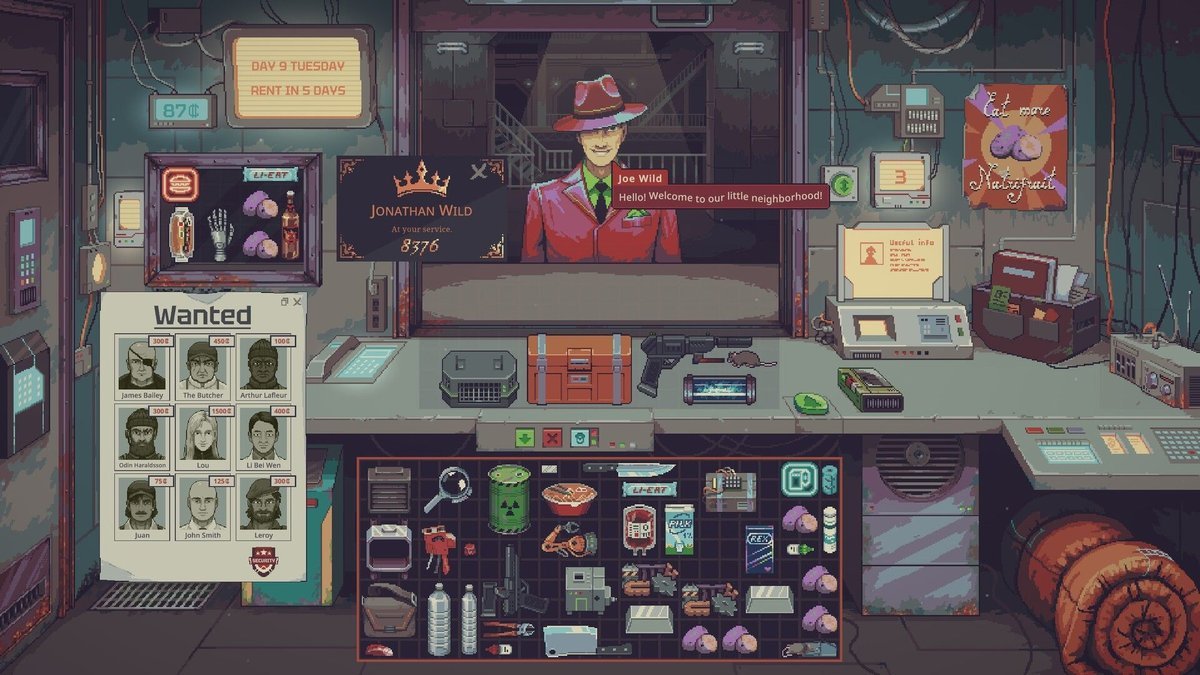
He cited tinyBuild's recent title, Probably Stolen – Cyberpunk Shopkeeper Sim, as a successful case study. The game was ready for announcement as early as May, but the publisher and developer Questing Goose Studio delayed the official reveal until August, then released the finished product in October. This compressed timeline gave potential clone creators far less opportunity to study the game and produce knockoffs before launch. Despite some repetitive gameplay elements, the strategy proved effective, with the game performing strongly commercially.
The approach contradicts conventional wisdom in game marketing, which typically emphasizes extended lead times to maximize anticipation and pre-order momentum. However, Nichiporchik's experience suggests that a tighter window between announcement and release can be equally effective while simultaneously reducing vulnerability to AI cloning attacks.
As AI technology continues to improve, the threat of game cloning will likely intensify. However, Nichiporchik's perspective offers some reassurance: authentic game design, rooted in careful craftsmanship and genuine innovation, possesses inherent advantages that AI systems cannot easily overcome. The real challenge for developers lies not in competing with AI clones directly, but in controlling the information window during which those clones can be created and distributed.